
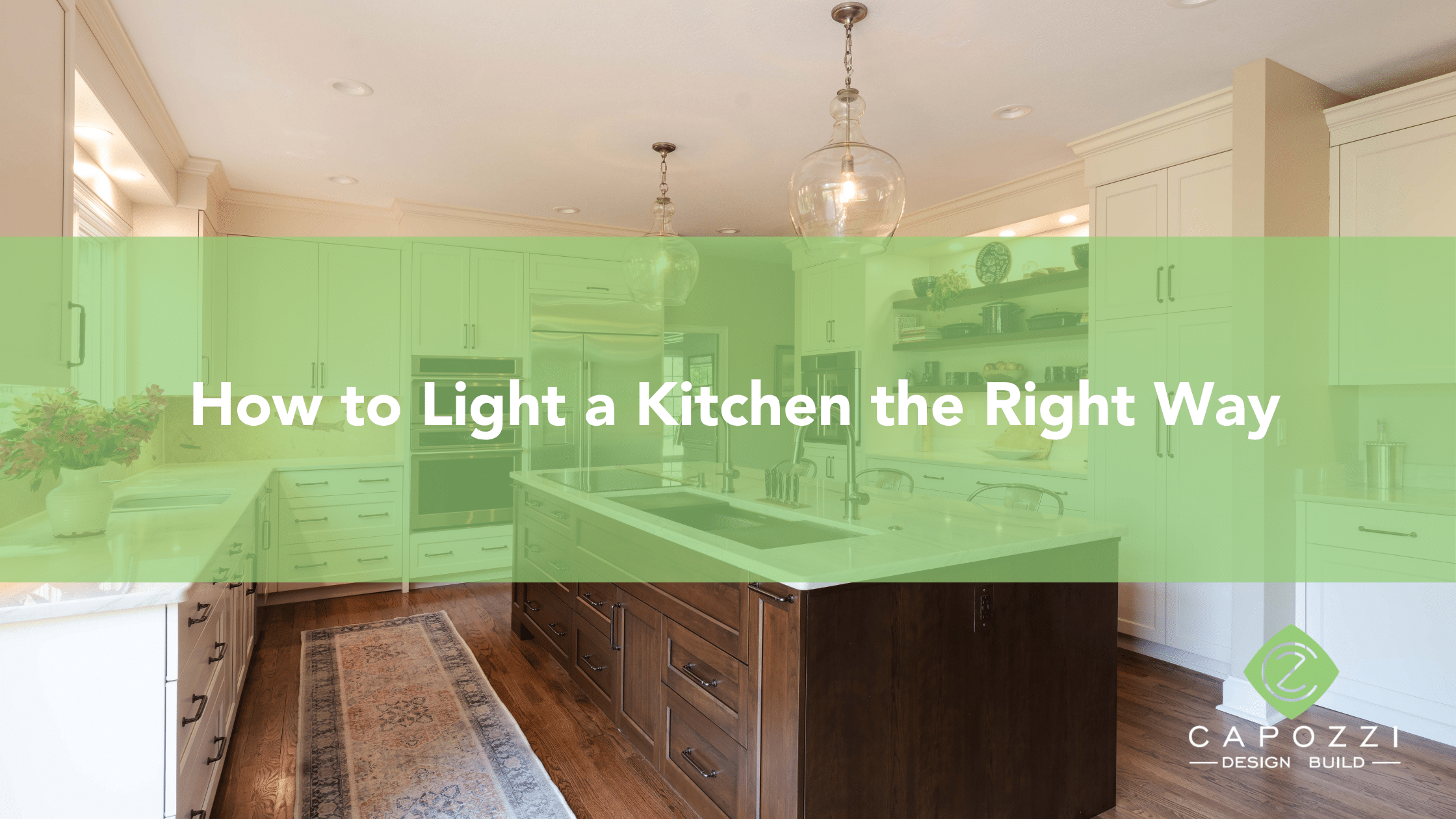
A lot of kitchens look beautiful during the day. Then evening comes, and the room starts to feel off.
The island looks dramatic, but it does not really help when you are chopping vegetables or helping with homework. The prep area feels dim. The backsplash disappears after sunset. The cabinetry looked rich and detailed in daylight, but flat and shadowy at night. And suddenly the kitchen does not feel quite as finished as it should.
That is usually not a materials problem.
It is a lighting problem.
At Capozzi Design Build, we believe kitchen lighting should be part of the design from the very beginning, not something added after the layout, cabinetry, and finishes are already decided. Because lighting does more than brighten a room. It affects how the kitchen works, how it feels, and how every finish in the space is experienced.
A beautiful kitchen needs more than enough light.
It needs the right light in the right places.
Start with how you actually use the kitchen
The best kitchen lighting ideas start with real life.
Where do you prep? Where do you cook? Where do people gather? Where do children sit? Where do guests naturally stand while you are trying to finish dinner? Where do you want the room to feel bright and active, and where do you want it to feel softer and calmer?
These questions matter.
A kitchen is not well lit just because it has several fixtures. It is well lit when the light supports the way you live in the room every day.
That is one reason many kitchen remodels miss the mark. The space may have enough light in a general sense, but not enough useful light where it matters most.
The goal is not just a brighter kitchen. It is a kitchen that works better because the lighting was planned around real routines.
General lighting is important, but it cannot do everything
Every kitchen needs a good base layer of light.
This is the overall light that helps the room feel open, comfortable, and easy to move through. Recessed lighting or other ceiling fixtures often handle that job well.
But this is where many remodels stop too soon.
General lighting may make the room feel bright enough to walk through, but it usually does not do enough for prep work, cleanup, reading recipes, helping with homework, or creating a warm evening atmosphere.
That is why layered lighting matters so much.
A well-designed kitchen usually needs more than one kind of light. It needs overall light for the room, more focused light for work areas, and softer light that gives the space warmth and depth.
When that plan is missing, even a beautiful kitchen can feel flat.
Task lighting is what makes the kitchen work
If there is one part of a kitchen lighting plan homeowners should take seriously, it is task lighting.
This is the light that supports the real work of the room:
- chopping at the counter
- cooking at the range
- cleaning up at the sink
- making coffee early in the morning
- finding what you need inside storage areas
- finishing dishes late at night
Under-cabinet lighting is one of the best examples. It may seem like a small detail, but it makes a huge difference in how functional the kitchen feels. Without it, even a bright kitchen can leave shadows exactly where you need to see clearly.
That is why task lighting should be planned around work zones, not left to chance.
A kitchen should support the person using it.
It should not force you to work around poorly placed light.
Accent lighting is part of what makes a kitchen feel finished
Accent lighting is often treated like the extra layer.
In reality, it is part of what makes a kitchen feel complete.
This is the lighting that adds depth, warmth, and visual balance. It can highlight a backsplash, bring dimension to cabinetry, soften the room in the evening, and help the kitchen feel more connected to nearby living spaces.
This is also where lighting begins to affect how expensive and refined the room feels.
When the lighting is balanced, materials tend to look richer. Cabinet finishes show more depth. Countertops read more clearly. Tile and texture feel more intentional. When the lighting plan is weak, even strong selections can lose some of their impact.
Lighting does not just help you see the kitchen. It helps the kitchen look like the room it was meant to be.
Dimmer switches make the kitchen far more flexible
A kitchen has to do a lot in one day.
Morning coffee. School lunches. Focused meal prep. Casual conversation. Cleanup. Entertaining. Quiet evenings when you do not want the room blasting at full brightness.
That is why dimmer switches matter so much.
They let the room change with the moment. Bright when you need energy and focus. Softer when you want warmth and calm.
This is especially important in open or connected first floors. The kitchen often needs to stay functional without overpowering the rest of the home. A good dimming plan helps the room support both activity and atmosphere.
And it is one of the simplest ways to make the kitchen feel more thoughtful and more comfortable.
Pendant lights should help the room, not just decorate it
Pendant lights get a lot of attention, and for good reason.
They are visible. They add style. They often become the jewelry of the kitchen.
But a beautiful pendant is not the same thing as a good lighting plan.
That distinction matters.
A pendant over an island can define the space and add character, but it also needs to work with the rest of the room. If it creates glare, casts awkward shadows, or competes with the task lighting below, it may be doing more for the photo than for the kitchen itself.
The best pendant lighting adds personality while still respecting scale, sightlines, and how the room is used every day.
It should support the kitchen, not distract from it.
The best kitchen lighting plans feel natural, not obvious
That is really the point.
A well-lit kitchen does not call attention to how many fixtures it has. It simply feels good to be in. Bright where it needs to be. Softer where it should be. Easy to work in. Easy to gather in. More complete from morning to evening.
That kind of result rarely happens by accident.
It comes from planning the lighting at the same time as the layout, flooring, cabinetry, finishes, and the way the room will actually be used.
At Capozzi Design Build, we believe the best kitchens feel better because the plan was better. And lighting is a big part of that.
A finished kitchen needs a finished lighting plan
A kitchen can have beautiful materials and still feel unfinished if the lighting is not right.
That is why one of the smartest things you can do early in a remodel is think beyond fixtures and start thinking about function. Where should the room feel bright? Where should it feel calm? Where do you need better visibility? Where do you want warmth and depth?
Those answers shape a much better kitchen than choosing pendants at the end.
Your next step is to download our free Clarity & Confidence Method Guide. It is a helpful starting point if you want to think through kitchen layout, daily routines, and the kinds of design decisions that make a remodel feel more complete from the beginning.
And when you are ready to talk about a kitchen that looks beautiful and works beautifully at every hour of the day, book an appointment with Capozzi Design Build or call 440-247-9496 to begin the conversation.