

Did you know: cabinetry is usually the biggest investment in a kitchen remodel. It’s also the most impactful. Cabinetry affects every aspect of the kitchen, including layout, storage, workflow, and aesthetics. But which type of cabinets should you choose: custom cabinets, semi-custom cabinets, or stock cabinets? Which will give you the best balance of looks and functionality at an appropriate price point?
Capozzi Design Build has helped hundreds of Northeast Ohio homeowners make confident, informed decisions about their cabinetry through our proven design-build process that prioritizes function, budget alignment, and daily livability long before construction begins. We understand the definitions of stock, semi-custom, and custom, the national price ranges per linear foot, and when you should splurge or save on cabinetry. So in this article, you’ll learn the pros, cons, and costs of each cabinet type so you can choose the option that fits your kitchen, timeline, and goals.
Deciding Between Custom Cabinets and Stock Cabinets
When we begin a kitchen remodel, we let your desired outcomes direct our approach to your cabinetry. We analyze the room as it is because the space often dictates whether custom cabinets or stock cabinets give you better value through smarter use. From there, we determine how you cook, host, and store, and use that to filter your cabinet options based on your comfort budget.
After you’ve made about 95% of your selections, we’ll have real layouts, real materials, and a firm price for your cabinets in place. We want to ensure that you get the most out of your cabinets over time, so we take this decision very seriously.
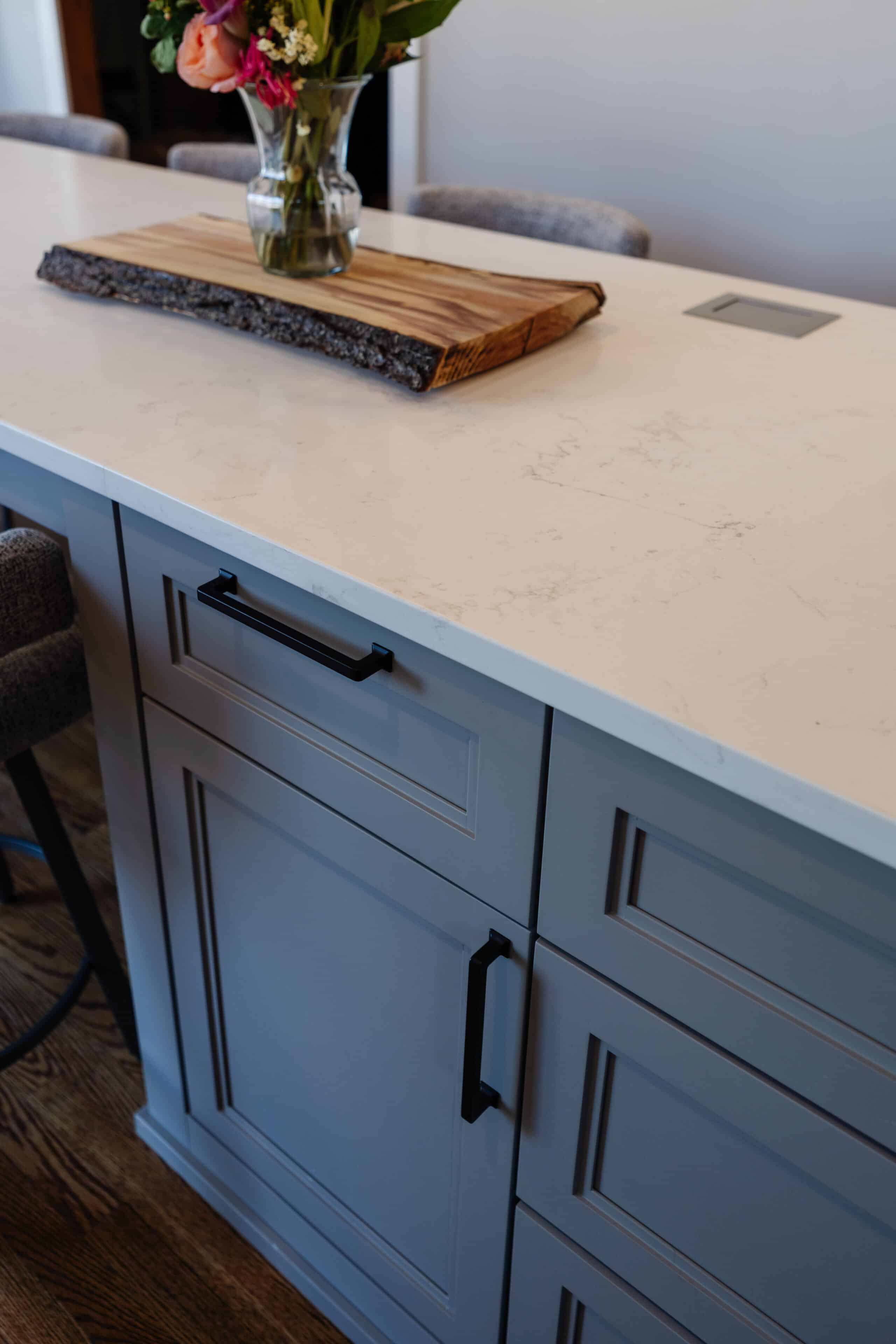
Defining Custom Cabinets, Semi-Custom Cabinets, and Stock Cabinets
- Stock Cabinets:
- Pre-made in set sizes/finishes
- Fastest lead times, lowest prices, least flexibility
- Good for straightforward spaces, tight timelines, or secondary areas (laundry, mudroom)
- Semi-custom Cabinets:
- Broader range of sizes, door styles, and finish options
- Some modifications possible
- Provides a better fit, upgraded materials, or a particular aesthetic without the full custom price
- Custom Cabinets:
- Built to your kitchen — every inch, every interior, every detail
- Best when you want exacting proportions, specialized storage, continuity across rooms, or heirloom finishes
As a rule of thumb, cabinets and hardware commonly account for one-third of a kitchen budget, so the category you choose meaningfully shapes the whole project. Industry budgeting frameworks and remodelers routinely estimate cabinetry as 20–40% of the total remodel budget.
Investing in Custom Cabinets, Semi-Custom Cabinets, or Stock Cabinets
The pricing of cabinetry varies by market, materials, finish complexity, and installation, but the current national ranges provide a useful baseline.
- Stock Cabinets: anywhere from $125 – $350 per linear foot
- Semi-custom Cabinets: about $400–$900 per linear foot
- Custom Cabinets: roughly $500–$1,200+ per linear foot
If your existing cabinet boxes are structurally sound and the layout still works, we do not recommend refacing. Refacing is a false economy. It puts new lids on old boxes, which results in mismatched interiors, no modern drawer banks, and seams that soon show.
To keep the bigger picture in view, our kitchen investment guide provides typical regional ranges and explains how your selections, home age, and project scope influence your total budget. This information is handy when you’re allocating your budget across cabinets, counters, appliances, lighting, and trades.
Determining the Pros and Cons of Stock Cabinets, Semi-custom Cabinets, and Custom Cabinets
Stock Cabinets:
- Pros:
- Speed
- Savings
- Simple decisions
- Great for standard layouts and quick turnarounds
- Cons:
- Require filler strips and finesse to make them fit
- Few interior options
- Limited door styles and finishes
Semi-custom Cabinets:
- Pros:
- Strong value for most kitchens
- More sizes
- Upgraded interiors
- Better organization
- Improved fit and finish
- Cons:
- Not every maker offers true modification
- Must confirm details like plywood boxes, dovetail drawers, and finish quality
Custom Cabinets:
- Pros:
- Every inch optimized
- Perfect for tricky footprints, ceiling-height alignments, and furniture-style islands
- Accommodates color-matched finishes and integrated storage such as spice pullouts, tray dividers, deep drawers, and charging stations
- Cons:
- Higher investment
- Longer lead time
- Require a design-build partner who manages specs, shop drawings, finish samples, and site conditions tightly

Discovering Construction Details that Influence Cabinet Longevity
During a kitchen remodel, you must make two choices that will shape the performance and capacity of your cabinets.
First, you must decide between framed and frameless cabinets. Frameless cabinets are European and typically have slightly wider openings. But they can still look traditional or transitional. Framed cabinets are what we are most used to here in the United States. Framed cabinets require less skill for installation, and the fit isn’t as refined. Both types of cabinets are durable when well-built. And the quality of materials and the joinery matter more than the label.
- Box materials and hardware
Next, you should pay attention to the materials and hardware of your cabinet boxes. Plywood boxes, soft-close hinges, full-extension slides, and durable finishes are worth prioritizing. They impact daily experience far more than an exotic door profile.
Spending and Saving on Cabinets
To spend money wisely on your cabinets and save money where you can, we suggest the following:
- Invest in what lasts: Use your budget to secure a smart layout, solid boxes, and a top-quality finish that outwears small shops. Our design process focuses on combining quality products with efficient work zones, smooth traffic flow, and effective storage to ensure you love your kitchen for years.
- Save by standardizing: A professional knows when to select standard options to save money. For example, you should choose a durable standard finish rather than a custom finish and keep the door style and hardware simple in the areas that won’t be seen.
- Consider a hybrid: A hybrid kitchen could feature a combination such as a custom hood or island and semi-custom perimeter cabinets, or a custom cabinet run on the long, tricky wall with stock cabinets for the butler’s pantry. The mix gives you precision where you need it and economy where you don’t.
Checking Cabinet Timelines, Delivery, and Installation
The time required to get your new cabinets depends on the type. Stock cabinets can be quick-shipped in 2-5 weeks, while semi-custom and custom cabinets can take 5-10 weeks to receive. Regardless of the category, meticulous site protection, sequencing, and communication are essential for smooth, controlled installations. And our team coordinates trades, pulls permits, and stages materials to keep your project predictable.

Seeing How Cabinet Costs Affect the Total Kitchen Budget
Because cabinetry is so foundational to a kitchen, choosing the right kind of cabinet helps you maintain balance across appliances, countertops, lighting, and electrical without expanding the scope of your project. We’ll help you build a realistic budget with a small contingency so that surprises in older homes don’t derail your plans.
Planning to Find Your Perfect Cabinets
Now that you’ve seen how custom cabinets, semi-custom cabinets, and stock cabinets compare in cost, flexibility, and long-term value, you can choose the best ones for your kitchen.
Choosing cabinets isn’t just a budget decision; it’s an everyday kitchen decision. Whether you want more efficiency, a seamless look, or maximum functionality without overspending, the right cabinets support your goals and your lifestyle.
If you’re ready to dig deeper, check out our Project Investment Guide to see how cabinets fit into the bigger kitchen picture. Or, explore our Design-Build Process to understand how we guide you from vision to final install without costly surprises.
At Capozzi Design Build, we help homeowners make informed, confident choices that stand the test of time every day. When you’re ready to start, we’re here to walk you through it, step by step. So, contact us today!